In the dynamic world of programming, the ability to introduce an element of unpredictability is incredibly powerful. Whether you're building a game, simulating complex scientific phenomena, analyzing data, or securing sensitive information, generating random numbers is a fundamental skill that every Python developer should master. Python provides robust and versatile tools within its standard library and popular third-party modules to achieve this, making it surprisingly straightforward to add a touch of controlled chaos to your applications.
This comprehensive guide will demystify the process of generating random numbers in Python, from the simplest integers to cryptographically secure sequences. We'll explore the core modules, their key functions, and the practical scenarios where each shines brightest, helping you choose the right approach for any challenge. To dive deeper into the foundational concepts and practical code examples, you'll want to Learn Python Random Numbers using its built-in functionalities.
Mastering Basic Randomness with Python's random Module
The random module is Python's go-to for general-purpose pseudo-random number generation. It's perfect for most common tasks like picking a random item from a list, simulating a dice roll, or generating a random test value. While "pseudo-random" means these numbers aren't truly random but are generated by an algorithm, they are sufficiently unpredictable for a vast array of applications.
Generating Integers: randint() and randrange()
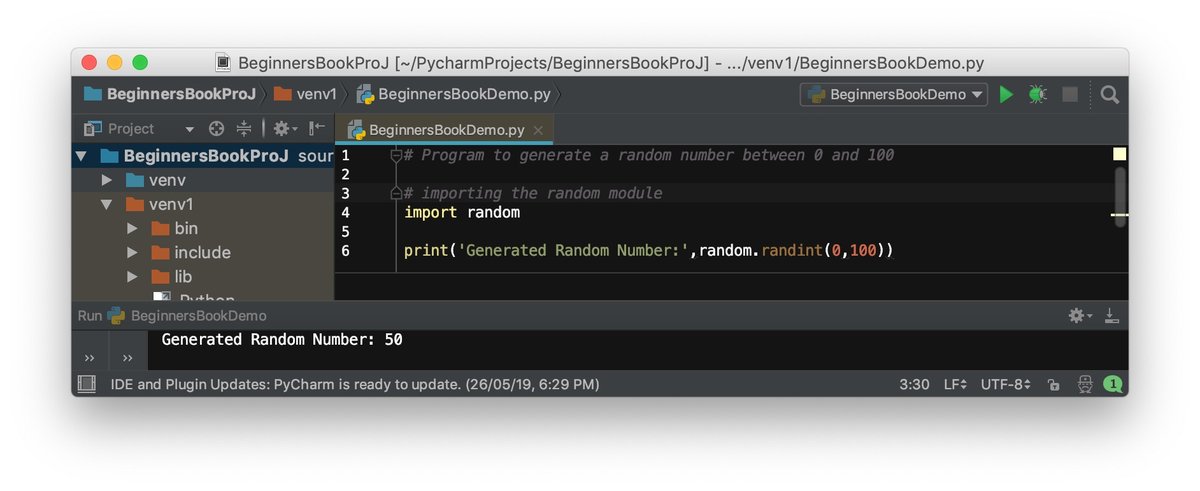
For whole numbers, Python offers two incredibly useful functions. random.randint(minimum, maximum) is your friend when you need an integer within an inclusive range, meaning both the minimum and maximum values can be returned. This works seamlessly for positive or negative ranges, giving you flexibility to, say, simulate rolling a six-sided die by calling random.randint(1, 6).
On the other hand, random.randrange(start, stop, step) provides more granular control. It returns a random integer starting from start (inclusive) up to stop (exclusive), similar to how range() works. The optional step parameter allows you to define intervals, perfect for picking only even numbers or numbers within specific increments.
Working with Floating-Point Numbers: uniform()
When your application requires decimal values, random.uniform(a, b) steps in. This function delivers a random floating-point number within an inclusive range [a, b]. It's ideal for simulations that require continuous values, such as generating random coordinates or varying probabilities. You can even typecast its output to int() if you need an integer after generating a float, though randint is generally preferred for direct integer generation.
Selecting Unique Items: sample()
Sometimes, you don't just need a random number; you need a list of unique random numbers or items from a collection. random.sample(population, k) is designed for this. It draws k unique values from a population (which could be a list, tuple, or even a range() object) and returns them as a new list. This is invaluable for tasks like drawing lottery numbers or creating unique IDs without duplicates.
Controlling Randomness: Seeding for Predictable Outcomes
While randomness is often desired, there are scenarios where you need your "random" sequences to be repeatable. This is where the concept of seeding comes into play. Python's random module generates pseudo-random numbers based on an initial "seed" value. If you use the same seed, you'll get the exact same sequence of random numbers every time, which is critical for debugging, testing, and ensuring reproducibility in scientific experiments. To gain a deeper understanding of how to ensure reproducible results guide to controlling the random number generation process, exploring the random.seed() function is essential.
Advanced Randomness: Beyond the Basics with NumPy
For tasks involving a large volume of random numbers, especially in numerical computing, data science, and machine learning, Python's built-in random module can sometimes be less efficient. This is where numpy.random truly shines. Part of the powerful NumPy library, this module is optimized for generating arrays of random values with incredible speed and flexibility, making it a cornerstone for many advanced applications.
Efficient Integer and Float Arrays
NumPy provides its own version of familiar functions, optimized for arrays. numpy.random.randint(low, high, size) generates an array of random integers within a specified range [low, high), with the size parameter defining the dimensions of your array. Similarly, numpy.random.uniform(low, high, size) produces arrays of floating-point numbers. These functions are indispensable for tasks like initializing neural network weights or generating large datasets for testing. For those interested in delving into more specialized random number distributions beyond simple uniform or integer ranges, you'll find immense value in exploring techniques for Generating Random Numbers from Specific statistical patterns.
Sampling from Existing Data
Beyond generating numbers, numpy.random.choice(a, size) allows you to select random numbers or items from an existing list or array a, outputting them into a new NumPy array. This is perfect for bootstrap sampling, creating random subsets of data, or simulating complex selection processes efficiently. If you're working with statistics, data modeling, or predictive analytics, you'll certainly want to Learn Randomness in DS & ML to see how these powerful tools apply.
Cryptographically Secure Randomness with the secrets Module
While the random module is excellent for most simulations and games, it's not suitable for security-sensitive applications like generating passwords, encryption keys, or security tokens. For these scenarios, you need cryptographically strong random numbers, which are far more difficult to predict and bypass. Python's secrets module is specifically designed for this purpose.
The secrets module draws from the operating system's source of randomness, providing true randomness that meets cryptographic standards. A key function here is secrets.randbelow(n), which generates a secure random integer in the range [0, n-1]. This ensures that your generated values are robust against sophisticated attacks, providing a vital layer of security. To understand how to leverage these capabilities for robust security implementations, it’s crucial to Explore Pythons secrets module.
Real-World Applications: Where Randomness Shines
The applications of random number generation are vast and diverse. Programmers constantly use them for:
- Testing and Debugging: Generating random inputs to thoroughly test program behavior under varied conditions.
- Data Shuffling: Randomizing the order of elements in a list, crucial for machine learning datasets or card games.
- Game Development: Creating unpredictable scenarios, enemy movements, item drops, or player starting positions.
- Simulations: Modeling probabilistic events like coin flips, dice rolls, or complex scientific phenomena.
- Cryptography: Generating secure passwords, session tokens, nonces, and cryptographic keys to protect sensitive data.
The ability to introduce controlled randomness fundamentally enhances the flexibility, robustness, and realism of countless software solutions.
Empowering Your Python Projects with Randomness
From simple dice rolls to complex cryptographic keys, Python provides a rich ecosystem for generating random numbers that cater to every need. Understanding the nuances of the random, numpy.random, and secrets modules empowers you to build more dynamic, secure, and intelligent applications. As you continue your journey in Python, mastering the art of generating and controlling randomness will undoubtedly open up new avenues for innovation and problem-solving. Dive into the specific pillars to deepen your expertise and unleash the full potential of random number generation in your projects.